
Top Content Title
This is an additional section to be able to add content

Equipment Checklist: Learn to Skate
To ensure our skaters stay safe, comfortable, and warm while learning basic skating skills, please follow these guidelines for the Learn to Skate program.
Mandatory Helmet Policy
Safety is our top priority. All skaters in the Learn to Skate program must wear a helmet at all times while on the ice.
- Permitted Styles: Hockey helmets (with or without a cage/facemask) are strongly recommended. Ski helmets are also permitted.
- Prohibited Styles: Cycling helmets are not permitted.
- Fit: The helmet must fit snugly, sit low enough to cover the forehead, and have the chin strap securely fastened.
Clothing, Accessories & Hair
Skaters should wear comfortable, warm, and flexible clothing that allows easy movement on the ice:
- Apparel: Warm, stretchable pants (such as snow pants, track pants, or fleece leggings) are ideal. Jeans are discouraged as they restrict movement and absorb moisture easily when wet.
- Warmth: Dress in breathable layers so skaters can adjust as they warm up. Warm socks (one pair of well-fitted, medium-thickness socks) are best.
- Handwear: Gloves or waterproof mitts are mandatory for all skaters to keep hands warm and safe.
- Hair: Long hair must be securely tied back and kept out of the skater's face so vision remains clear.
Choosing the Right Skates & Maintenance
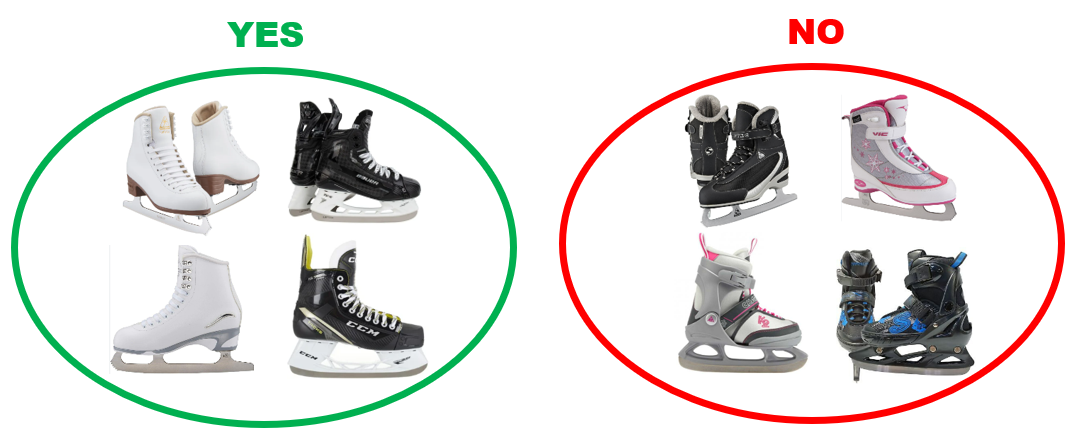
Skaters may wear hockey skates, figure skates, or recreational skates in this program. Proper fit and support are key to helping young children build balance and confidence on the ice:
- What to Avoid: We strongly discourage skates with plastic shells, buckles, or Velcro fasteners (including brands such as Softec, K2, etc.), as they lack the necessary ankle support for developing proper technique.
- Ankle Support: Regardless of the style, boots should provide good stiffness and solid ankle support. Avoid ultra-soft or unsupportive skates that cause ankles to bend inward.
- Fit & Sizing: Do not purchase skates with excessive "room to grow." Skates that are too large lead to poor stability, lack of control, and painful rubbing or blisters. Skates should fit snugly with thin-to-medium socks.
Shopping & Buying Used
- Local Retailers: General sporting goods stores such as SportChek, Source for Sports, or Canadian Tire offer a variety of new beginner skates and hockey equipment.
- Specialty Shops: For specialized fitting or figure-skating-specific equipment, visit Professional Skate or The Skate Lab.
- Buying Used: Consignment and second-hand shops like Play It Again Sports or 2nd Chance Sports are great budget-friendly options.
-
-
Inspecting Used Skates: Ensure the ankle support is still firm (not heavily creased or broken down), the blades have sufficient steel left for sharpening, and all eyelets/lace hooks are intact.
-
Skate Care & Sharpening
- Sharpening: Have skates sharpened before the first session. Freshly sharpened skates offer much better traction and stability.
- Skate Guards: Use hard plastic guards when walking off the ice (on concrete or non-rubber surfaces) to protect the blades from dulling or nicking.
- Blade Maintenance: Always wipe blades thoroughly dry with a towel after every session and store skates outside of hard guards (preferably in cloth soakers) to prevent rust.
Bottom Content Title
This is an additional section to be able to add content